A weather app can tell you the air temperature, but it cannot tell you whether a sunlit stucco wall, dark front door or piece of exterior trim is already too hot for the paint system being used. In St. Augustine, that distinction matters. A morning that feels workable can turn into a difficult painting window once direct sun, humidity and an afternoon shower enter the picture.
The practical answer is not to use one universal cutoff. Paint products have their own application requirements, and the surface being painted can be much hotter than the surrounding air. A good exterior plan checks the product label, the actual surface, the forecast and the side of the house before the first coat goes on.
The Short Answer: Let the Paint System Set the Limit
There is no responsible one-number answer to “How hot is too hot?” Some products allow a wider range than others, and the manufacturer’s directions apply to the air, surface and expected drying conditions. The exterior application guidance from Sherwin-Williams is a useful example of why painters need to follow the specific coating instructions rather than treating every sunny day as the same.
For a homeowner, the useful rule is simpler: if the wall is in full sun and feels much hotter than the air, the job needs a closer check. Heat can make paint set up too quickly. Humidity can slow the next stage of drying. A thunderstorm can interrupt both. The right move may be to paint a shaded elevation, change the work window or wait for better conditions.
Why a 90-Degree Forecast Is Not the Whole Story
Exterior painting happens on a surface, not in the air above the lawn. Light-colored stucco in shade may be workable while a darker front door or west-facing trim is absorbing intense afternoon sun. The material matters too. Wood, metal, masonry and previously painted surfaces do not all heat up or release moisture at the same rate.
That is why the time of day and side of the house matter so much in Florida. A crew can often make better progress by beginning on the shaded side, planning trim work around exposure, and avoiding the wall that will receive the hardest direct sun later in the day. The point is not to race the clock. It is to give each coat the conditions it needs to level and bond as intended.
Heat is only one part of it. Direct sun, wind, dew, high humidity and the chance of rain can each change the drying window. If a home already needs cleaning, caulk repair, wood repair or more thorough preparation, use the exterior-paint preparation checklist first. Good weather cannot rescue a damp or failing surface.
Four Checks Before Exterior Paint Goes On
1. Read the exact product label. Primer and finish paint may not have identical limits. The label sets the acceptable application range and the drying or recoat instructions. This is the information that should lead the decision, not a generic rule passed around online.
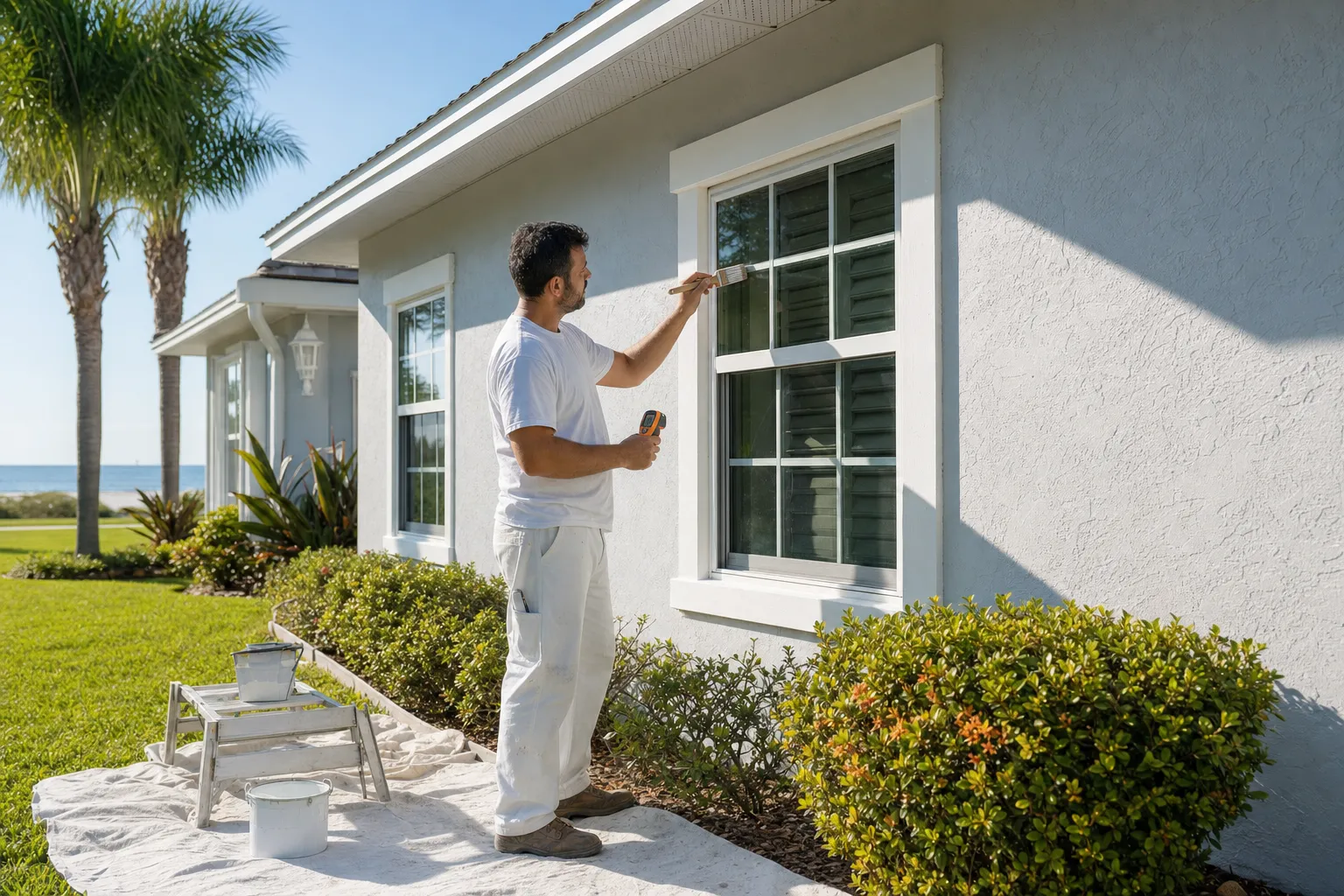
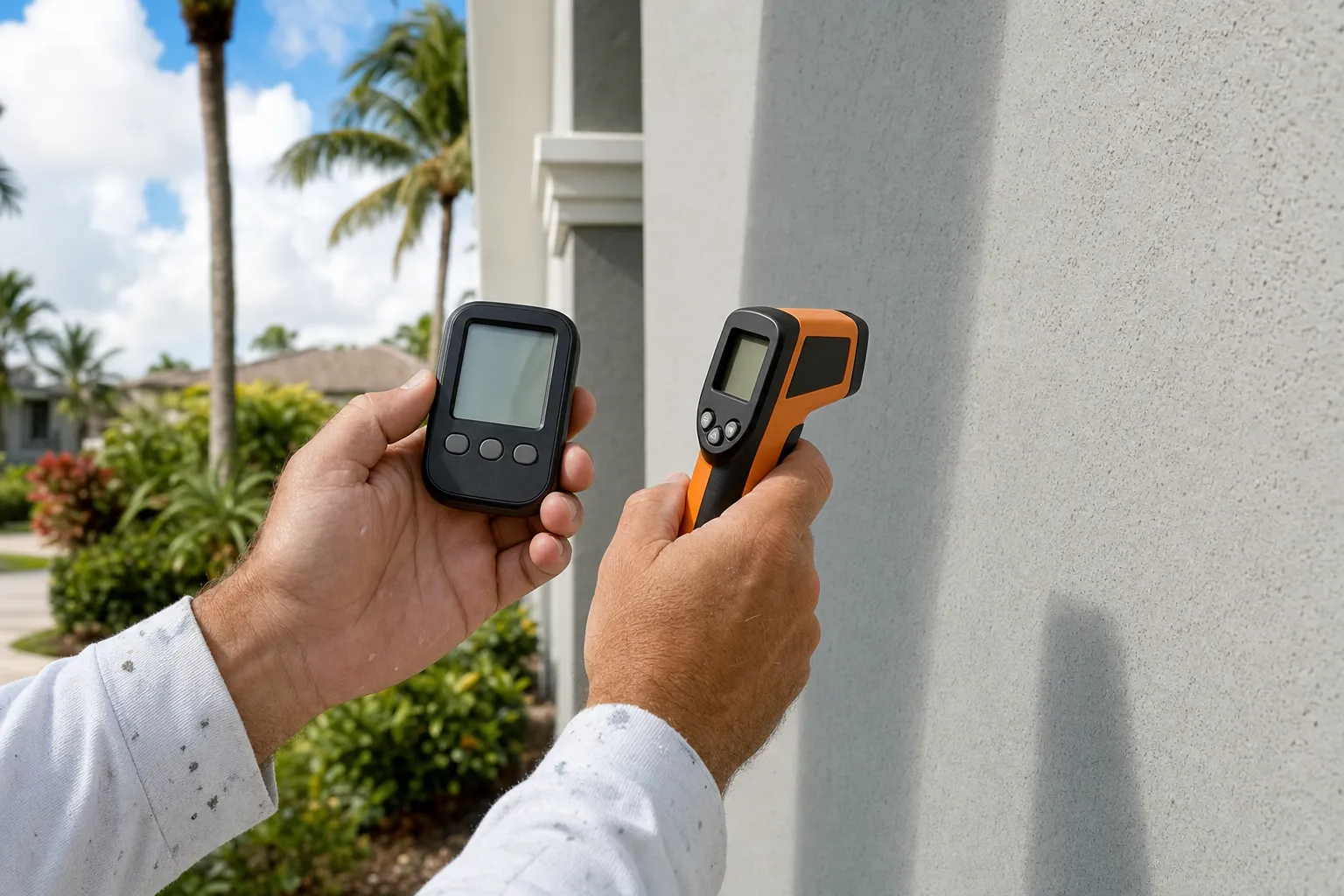
2. Check the wall, not just the weather app. A surface-temperature reading is especially useful on exposed stucco, doors, fascia and trim. A wall that feels hot to the touch deserves attention, even if the air temperature is technically within range.
3. Look at the whole drying window. The forecast at the moment of application is not enough. Consider when the surface will be in direct sun, whether humidity is likely to climb, and whether rain, dew or a rapid temperature change could arrive before the product has had the required time.
4. Confirm that the surface is dry and sound. Heat does not replace preparation. Loose paint, chalking, failed caulk, soft wood and moisture problems should be addressed before coating. The exterior painting service is built around that sequence: inspect the condition, make the needed repairs, then plan the finish around the actual house.
What Can Go Wrong When the Surface Is Too Hot
When paint is pushed onto a very hot surface, it can lose its workable time too quickly. That can make it harder for the coating to spread and level evenly, especially on broad wall areas or detailed trim. It can also leave a finish looking less uniform than it should once the light changes.
Rapid surface drying can create a skin before the layer beneath has had a fair chance to dry. Depending on the product and the condition underneath, that may contribute to blistering, uneven sheen or adhesion trouble later. A bubble is not always caused by heat, though. Moisture in the material, prior coating failure or poor preparation can be part of the story, which is why simply applying another coat is not a reliable fix.
For homeowners, this is a useful question to ask during a quote conversation: how will the work be scheduled around the home’s sun exposure and the forecast? A clear answer is a sign that the painting plan includes the details that protect the result, not just the color choice.
Humidity and Rain Need Their Own Attention
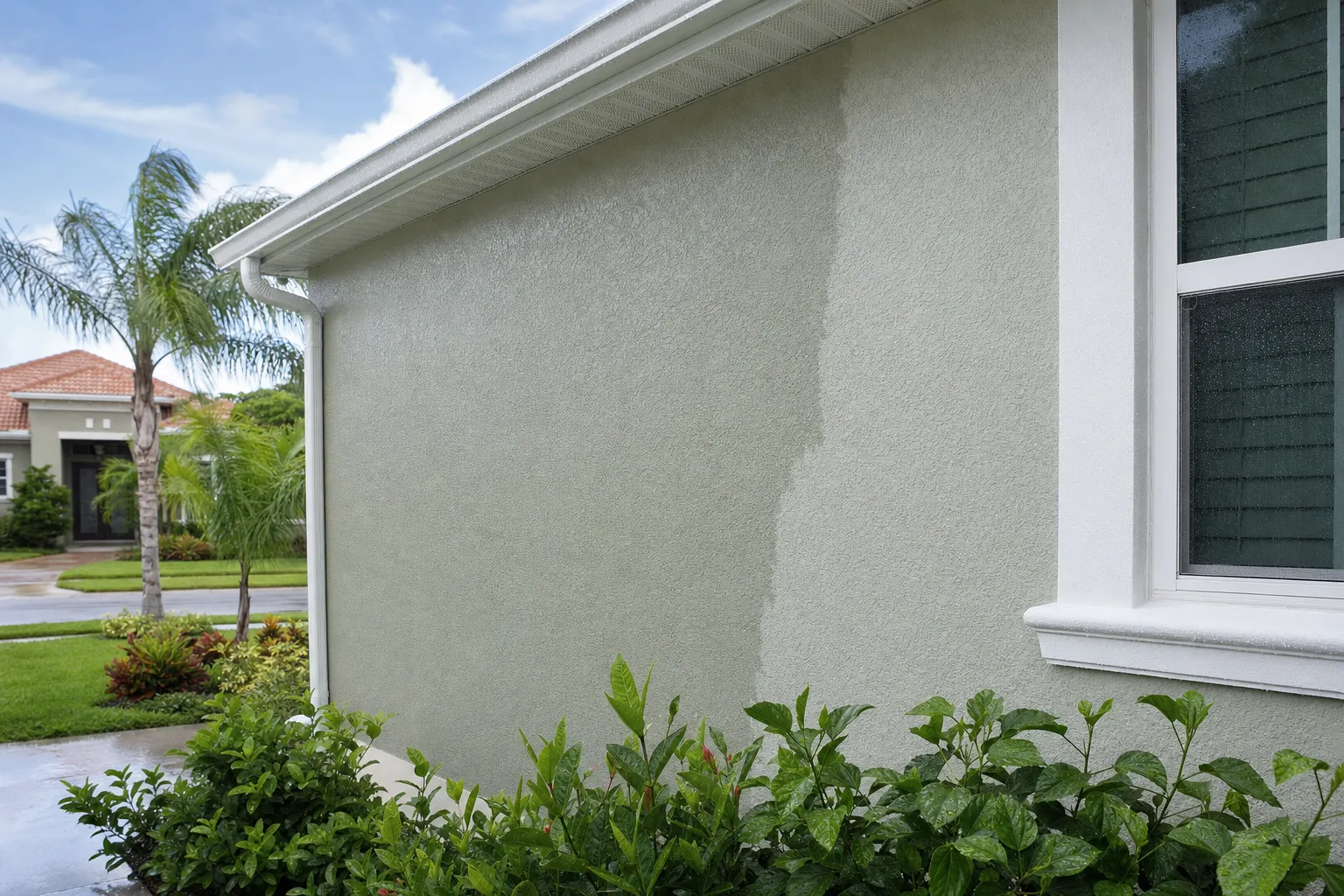
Florida’s warm, humid weather makes it tempting to focus only on high heat, but moisture is just as important. After rain, washing or overnight dew, the surface needs to be truly dry before paint is applied. The right waiting time depends on the material, shade, airflow, humidity and where water collected. A dry-looking wall can still have damp joints, trim edges or sheltered areas that need more time.
Rain in the forecast deserves a practical look, not a guess. The key question is whether the product will have the required time before rain reaches the surface. A forecast can shift, and a passing shower may affect one elevation differently from another. It is better to pause a coat than to spend a day applying paint that does not get the drying conditions it needs.
Homeowners can help by keeping gutters clear, trimming plants away from the walls and mentioning any history of leaks or recurring stains. Those details make it easier to separate ordinary weather delays from a moisture problem that should be repaired first.
How Florida Exterior Painting Is Planned Around the Day
A careful painting schedule often follows the house rather than a fixed hourly plan. The crew may start with a shaded wall, save a sun-facing elevation for a better window, move to protected trim, or stop early when the next stage would be rushed. That flexibility is part of protecting the finish.
It also matters when the project includes repairs. Open caulk joints, damaged trim and surface preparation should be completed and given the right conditions before the topcoat is applied. Browse the Good Fellas project gallery to see how repair, preparation and finish work come together in real local projects. The cleanest result usually comes from handling the underlying condition before the final coat covers it.
For an older home, be especially cautious about sanding or scraping deteriorated paint. The EPA’s Renovation, Repair and Painting program explains the safety requirements that can apply when work disturbs painted surfaces in pre-1978 housing. Heat and weather are important, but safe preparation comes first.
A Simple Homeowner Checklist for a Hot Painting Day
Before exterior painting begins, note which sides of the home receive direct sun in the morning and afternoon. Look for any trim, door or wall area that stays hot, holds moisture or has failed before. Check that exterior furniture, planters and vehicles are clear of the work area, then make sure the painter knows about irrigation, gates, recent leaks and surfaces that need special attention.
Most importantly, give the work room to be planned around the conditions. A short weather delay is easier than living with a finish that was forced onto a surface at the wrong time. When you are ready to discuss a repaint, request a quote from Good Fellas and include a few daylight photos of the areas you want to update. That helps start with the house, its exposure and the result you want.
Frequently Asked Questions
Is 90 degrees too hot to paint outside?
It can be, especially when the wall or trim is in direct sun. The air temperature is only one part of the decision. The paint product's allowed surface-temperature range, shade pattern, humidity and drying window all matter.
Can exterior painting be done in Florida summer?
Yes, when the coating requirements and weather window line up. Experienced planning may mean working shaded sides first, avoiding the hottest exposure, and stopping before rain or excessive surface heat creates a poor drying window.
How long should I wait to paint after rain?
Wait until the surface is genuinely dry and the paint manufacturer's requirements are met. Drying time changes with the material, shade, humidity, wind and whether water reached joints or areas behind trim.
Why does paint bubble in hot weather?
Paint that skins over too quickly can trap moisture or solvent beneath the surface. Bubbling can also point to moisture in the material, poor adhesion or another surface problem, so it is worth identifying the cause before repainting.