There is no honest one-number answer to how long you should wait to paint after rain. An exposed stucco wall may dry far sooner than shaded wood trim. A quick afternoon shower is different from a wet night followed by heavy humidity. And the paint label has the final say because each coating has its own temperature, humidity and moisture limits.
For a Florida exterior, the practical rule is simple: wait until the surface is dry all the way through the places paint needs to hold, then make sure the next weather window gives the coating enough time to set. That means looking beyond the obvious wall face. Check window trim, joints, ledges, porch ceilings, lower edges, sheltered sides and the places landscaping keeps damp.
The Short Answer: Wait for the Surface, Not Just the Clock
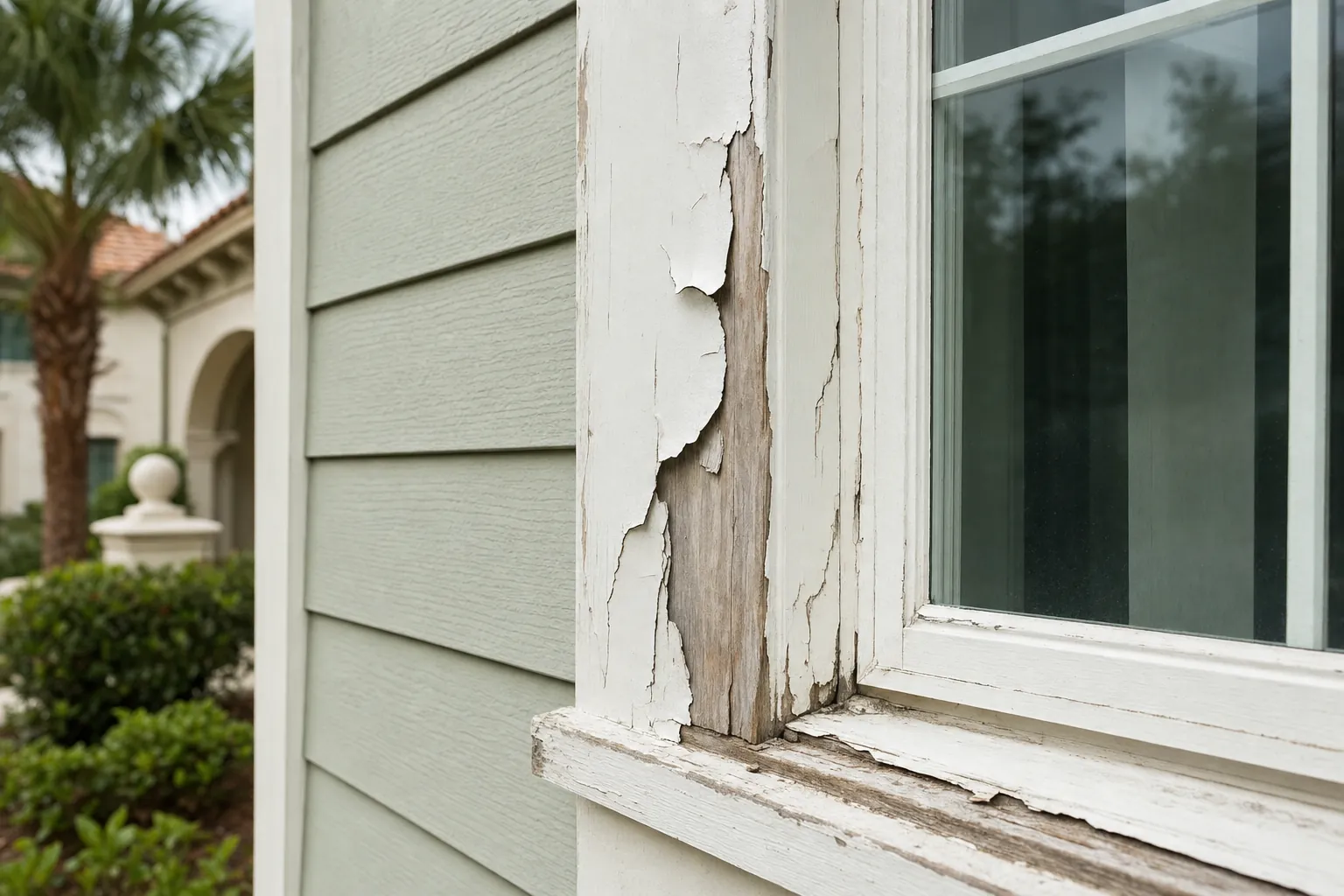
A bright, breezy day can dry some exterior surfaces quickly. That does not make the whole house ready. Porous stucco, wood trim, caulk joints, end grain, shaded siding and lower wall sections can hold moisture after the broad surface looks dry. Water can also sit behind a trim detail or work into a small gap that is not visible from the driveway.
Use the forecast as a planning tool, not a permission slip. Start with the paint manufacturer's instructions for the specific product. Then inspect the house itself. If the wall, trim or repair area is still cool and damp, if you can see darkened material near a joint, or if a cloth picks up moisture from a protected area, it is too soon.
Why the Same Rain Can Lead to Different Wait Times
Surface material matters. Smooth metal and sound, well-coated trim can shed water quickly. Bare or weathered wood, rough stucco, masonry and porous repairs can absorb it. That absorbed moisture needs time to move back out before a new coating can bond as intended.
Shade matters. The side that gets morning sun can look ready while a north-facing wall, a porch ceiling or trim behind dense landscaping stays damp. Look at the slow side of the house, not only the sunny elevation that is easiest to see.
Humidity and air movement matter. Florida humidity can slow drying even when the rain has stopped. A light breeze can help a surface dry, but it does not pull trapped water out of every joint or substrate instantly. A cloudy, still day after a long rain needs more caution than a brief shower followed by clear, moving air.
How water reached the surface matters. Rain that falls straight down is one thing. Wind-driven rain can push water into trim joints, under ledges and around windows. If gutters overflowed or water ran down a wall for hours, take the extra moisture seriously before moving to paint.

Check the Places That Dry Last
Start with the broad wall, then work toward the details. Run a clean, dry cloth across a protected area near a window, door, trim board or joint. Look for darkened edges, a wet sheen, active drips, swollen wood fibers or caulk gaps that still look damp. Check below eaves, behind downspouts, at the bottom of siding and around the lower trim where water can linger.
For an important exterior project, a moisture meter can be useful on wood and other materials it is designed to assess. It is not a substitute for judgment, but it can help confirm whether an area that looks dry has actually released enough moisture. Use it as one part of the decision, along with the paint instructions and a close look at the house.
Do not use a heater or aggressive pressure to hurry the process. Extra heat can create a misleading dry skin, and forcing water around the surface can create a different problem. Time, ventilation and the right weather window are usually the safer route.
Read the Paint Label Before You Pick the Restart Time
Exterior coatings are not interchangeable. A paint product may set limits for air temperature, surface temperature, humidity, dew point and rain exposure. Those limits can change with the product line, the substrate and the coating system. The surface-preparation guidance from Sherwin-Williams makes the central point clearly: a coating needs a clean, dry and sound surface to perform as intended.
The label also helps with the question that comes after painting: how much dry time does the new coat need before rain is a risk? Do not rely on a general online number when the can or product sheet gives a more specific requirement. That is especially important on a humid Florida day, when drying and curing can take a different path than they would in a dry climate.
If the label, the forecast and the condition of the wall do not line up, delay the coat. A short pause is less costly than a finish that has to be repaired because it was rushed onto a damp surface or caught by rain too soon.
Build a Better Florida Painting Window
Start by watching the rain pattern, not just the chance of rain. A small percentage can still hide a fast afternoon shower, while a morning rain may leave enough daylight for the sunniest side to dry if the material and product requirements allow it. Look at the hourly forecast, wind, humidity and the next likely rain window instead of only the daily icon.
Then work with the house. A thoughtful exterior plan may begin on the side that has dried first, move away from direct afternoon heat, and stop before the next round of rain becomes a problem. That is the same reason the guide to painting in hot weather focuses on surface conditions, shade and timing rather than a single air-temperature number.
Preparation should happen before the weather window opens. Protect landscaping, stage materials, address sound repairs and confirm access so the dry period is used for the work that needs it. The exterior-paint preparation checklist can help homeowners see which details should be settled before the painting day arrives.
Rain, Dew and Condensation Are Different Problems
Rain is easy to notice. Morning dew and condensation can be easier to miss, especially on a shaded wall or on trim that faces open grass and landscaping. A surface can be dry after yesterday's rain, then pick up new moisture overnight. That is why a morning start deserves a fresh check instead of assuming the prior afternoon's conditions still apply.
Look for a light sheen on horizontal trim, dampness under eaves, moisture on windows and cool spots near the ground. If the air is humid and the surface temperature is close to the dew point, water can form even without a new shower. The answer is not to chase weather data all day. It is to recognize that a dry forecast alone does not prove a paintable surface.
The same caution applies when a wall is cleaned. Washing removes dirt and organic growth, but it also adds water to the project. The surface must dry after cleaning just as it must dry after rain. A clean wall is only ready for paint when it is also dry and sound.
Do Not Paint Over the Reason Water Stays There
If one area is always slower to dry, find out why. A clogged gutter, a short downspout, a missing splash block, an open joint or dense plants against the wall can keep sending water to the same paint edge. Putting on a new coat without addressing that pattern may make the wall look better for a while, but it does not change the condition that caused the failure.
Check the spots directly below roof transitions, around windows, beside exterior doors, at deck connections and where trim meets masonry. If paint is peeling, wood feels soft or staining returns after each wet period, the project may need repair or water-management work before coating. Good Fellas can connect that practical scope with the exterior finish, so a small repair is not treated as a separate problem after the painting decision has already been made.

A Simple After-Rain Checklist
1. Confirm the rain has actually stopped. Do not judge the wall while water is still running from gutters, rooflines or vegetation. Give the exterior a chance to finish shedding water first.
2. Inspect the slowest-drying side. Look at shade, lower wall areas, window trim, joints, porch ceilings and any material that feels cooler or looks darker than the rest.
3. Check the product instructions. Confirm the coating's temperature, humidity and rain-exposure requirements before scheduling the next coat.
4. Look ahead, not just behind. The surface can be ready now, but a new storm in a few hours may not leave the fresh coating enough time to set. Plan around the next dry stretch.
5. Keep water problems separate from paint problems. If you see a recurring stain, soft trim, an overflowing gutter or a failed joint, identify the moisture path first. Paint is the finish layer, not the repair for water getting where it should not.
When Waiting Is the Best Call
Postpone the work when the surface still feels damp, when the same areas keep darkening after a shower, when humidity stays high with little air movement, or when the next rain is too close for the coating to set. Be especially careful around older trim, recently repaired areas, exposed wood and surfaces that have shown peeling or bubbling before. Those are not places to test whether the weather will cooperate.
For homes built before 1978, be careful about scraping or sanding older paint while you wait. The EPA's Renovation, Repair and Painting program explains when lead-safe requirements apply. That safety question should be answered before surface prep begins.
Plan the Exterior Around the Conditions It Has
Good Fellas approaches exterior painting as a complete condition-and-finish conversation. That is useful after rain because the right next step may be a short wait, a closer look at a trim detail, a repair before coating, or a better schedule for the house's exposure. The goal is not to force the calendar. It is to leave the exterior clean, dry, prepared and ready for a finish that has a fair chance to last.
That approach also keeps the estimate more useful. The conversation can account for the surfaces that need attention, the protection around the home and the conditions that affect the finish, instead of assuming every wall can be painted on the first clear-looking day.
Explore the exterior painting service, browse local project work, or request a quote when you are ready to walk through the condition of your home and the result you want.
Frequently Asked Questions
Can I paint the day after it rains?
Sometimes, but not automatically. A sunny, breezy day may dry a simple, exposed surface quickly, while shaded trim, textured stucco, joints, wood and areas behind landscaping can hold moisture much longer. Check the actual surface and the paint label before deciding.
How long does exterior wood take to dry after rain?
There is no dependable one-size-fits-all number. Wood can hold moisture after it looks dry, especially near joints, end grain and trim details. Give it time, check the protected areas, and use a moisture meter when the project or surface condition warrants one.
Can I paint if the wall feels dry but it rained overnight?
A wall can feel dry at the surface while moisture remains in seams, cracks, wood trim or porous material. Look at the shaded side, lower edges, window trim and any place water can collect. If those areas are still damp, wait.
What happens if rain hits fresh exterior paint?
The result depends on the coating, how long it had to set and the amount of rain. Water can leave marks, weaken adhesion or affect the finish before paint has developed enough resistance. Follow the product guidance and inspect the surface before deciding whether it needs correction.
Should I pressure wash and paint on the same day?
Usually, no. Cleaning can be an important preparation step, but the exterior needs to dry fully before coating. The right timing depends on the material, weather and paint system, so it is better to plan washing as part of the preparation window instead of rushing directly into paint.