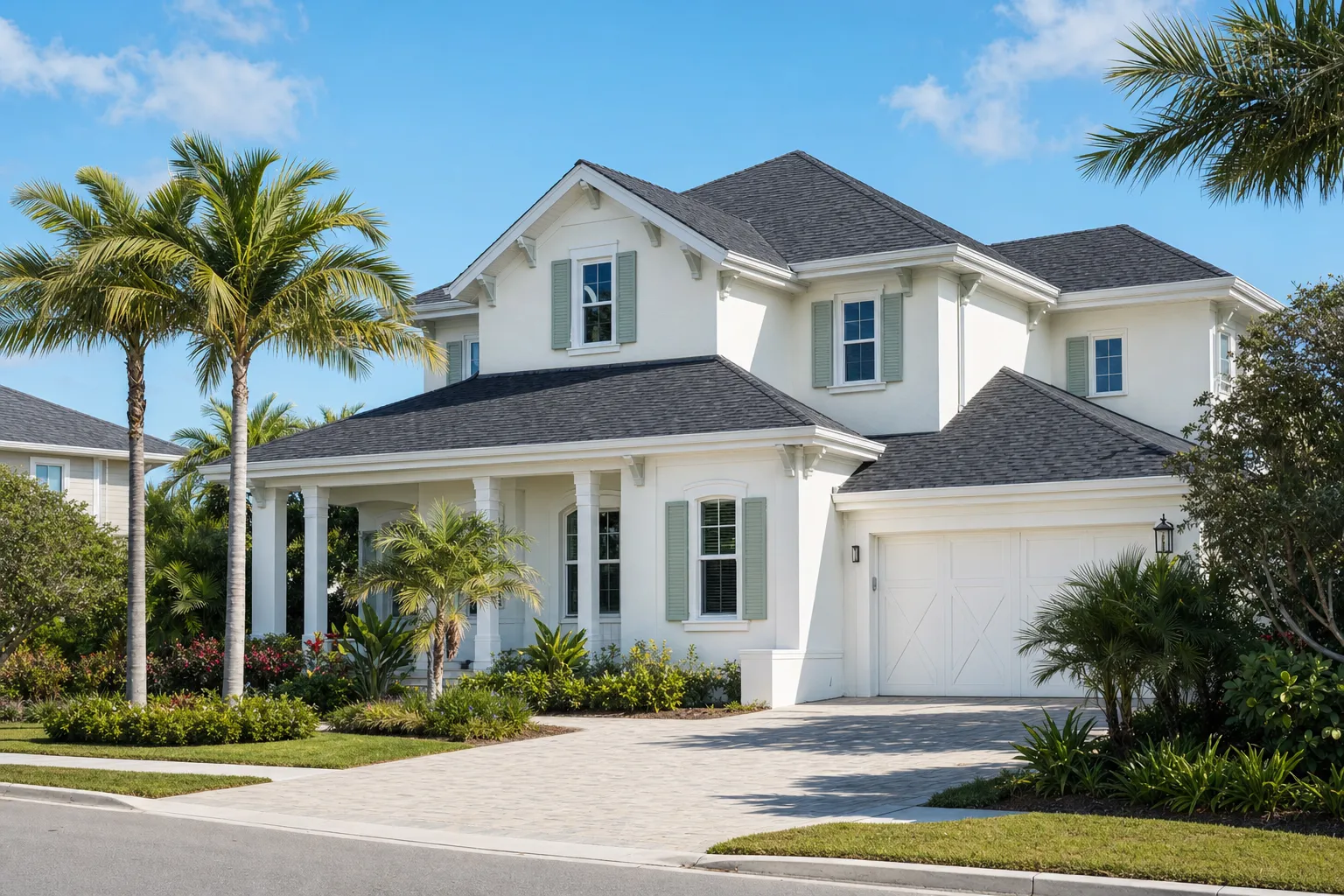
Choosing an exterior color in Florida is less about finding the one “right” shade and more about putting the right pieces in order. A paint color has to live beside the roof, driveway, stone, window frames and landscaping that are already there. Then it has to look good in clear morning sun, under a covered porch and after a summer storm. The safest way to avoid an expensive near-miss is to build a small palette around the house itself, test it outside and let the fixed materials lead.
This does not mean every Florida home needs to be white, gray or beach blue. A warm cream can work beautifully with a dark roof. A quiet sage can make a white-trimmed house feel grounded. A deeper door color can add character without turning the whole house into a statement. The point is to make the colors relate to each other and to the conditions around the home.
Use this guide as a practical order of operations. It will help you narrow the choices before paint chips take over the kitchen counter, then give you a useful way to test the finalists before a full exterior repaint.
Start With What Is Not Being Painted
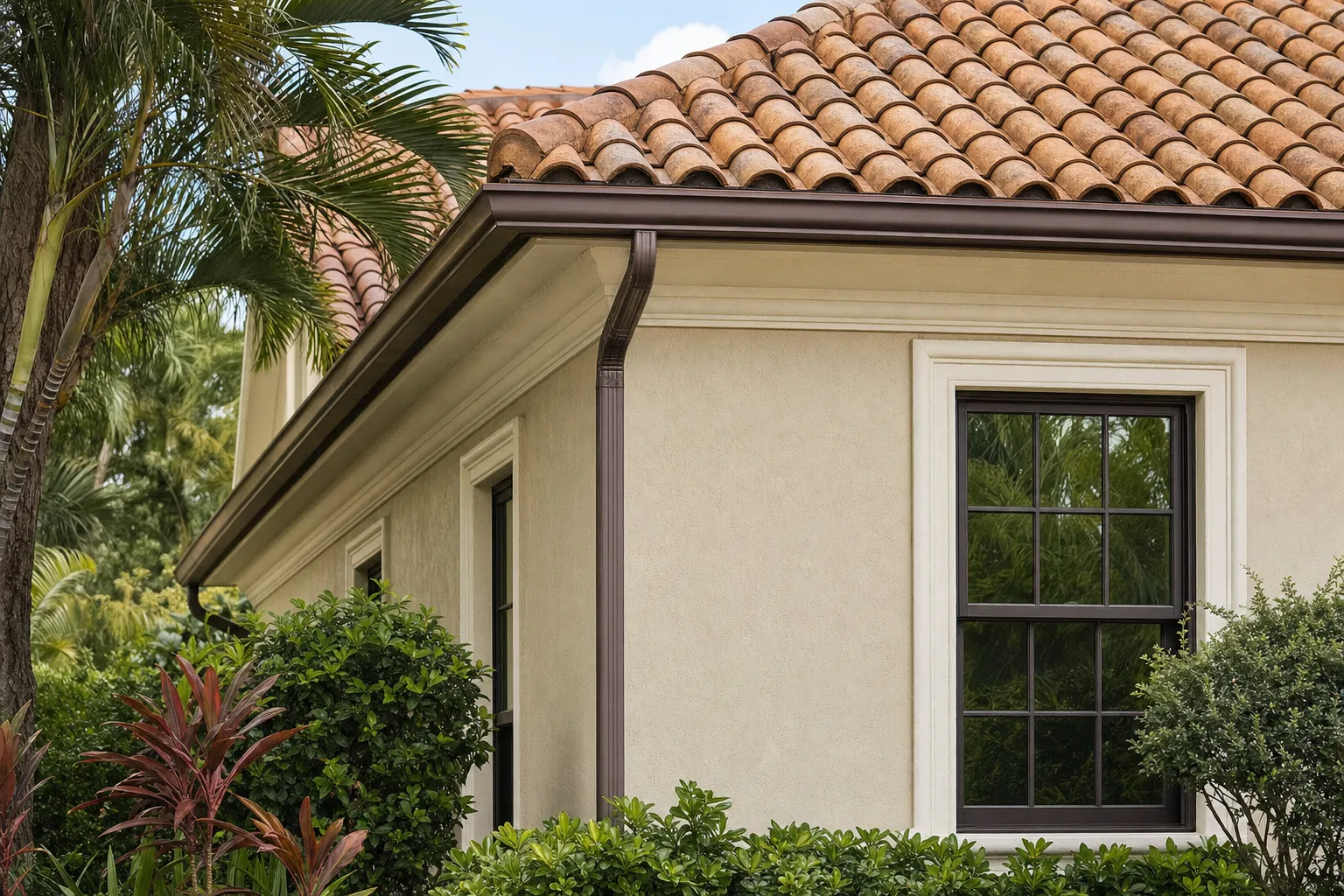
The roof is usually the biggest fixed color on the property, so start there. Look at it in daylight and decide whether it reads warm, cool, neutral or strongly colored. A charcoal shingle roof, terracotta tile roof, weathered metal roof and pale concrete tile roof each pull a paint palette in a different direction. Sherwin-Williams recommends considering existing roof, masonry, doors and railings because those elements influence the exterior color that will feel cohesive.
Next, include the driveway, pavers, brick, stone, gutters, window frames and any permanent fencing. These are not background details. Their undertones can make a paint sample look cleaner, yellower, cooler or muddier than it did in the store. A soft white that works beside gray pavers may look too stark against warm shellstone. A gray-green body color may look balanced with a charcoal roof but awkward with orange-toned brick.
Take one broad photo from the street and one closer photo of the roof, trim and hardscape before shopping. If you are already planning work around worn trim, siding or exterior details, the exterior painting service can help you think through the surface condition and finish plan together instead of treating color as a separate decision.
Choose the Mood Before the Exact Color
Once you know what the house already needs to work with, decide how you want it to feel from the street. This is more useful than starting with a long list of named paint colors. A calm, classic exterior might begin with a warm white or soft greige body color, a slightly cleaner trim and a dark front door. A coastal-leaning house may suit a muted blue-green or pale sage body color with bright white trim. A traditional home with a tile roof may need a warmer neutral that sits comfortably beside the roof rather than fighting it.
Keep the description simple: warm and understated, clean and crisp, relaxed coastal, or more contrast around the entry. That gives each later choice a job. Benjamin Moore’s exterior color guidance notes that a typical exterior palette includes the body, trim, windows, garage doors, shutters and other exterior elements. In practice, most homes look strongest when the biggest surfaces stay restrained and the personality is saved for the details.
Do not feel pressured to chase a trend because it looks good on a different style of house. A color that photographs well on a large modern stucco home may look out of place on a smaller bungalow, a historic cottage or a home with a prominent tile roof. Your own architecture should win the argument.
Use a Simple Body, Trim and Accent Plan
For most homes, three roles are enough. The body color covers the largest wall areas. The trim color frames windows, fascia, columns and other edges. The accent color belongs on the front door, shutters, railings or one small architectural feature. Thinking in roles keeps the decision manageable and prevents every exterior detail from demanding its own color.
A low-contrast scheme can feel settled and easy to maintain: warm white body, soft white trim and a muted green or black door. A more defined scheme might use a pale greige body with crisp white trim and a deep blue door. When the home has shutters, choose whether they are an accent or part of the main composition. They should support the body color and roof rather than compete with both.
Be careful with contrast on busy facades. Columns, gables, multiple rooflines, decorative trim and several garage doors already create visual activity. A quieter palette can make those features look intentional. A simpler house may have more room for a stronger door or shutter color. The coastal home update project is a useful reminder that exterior elements such as railings, flooring and siding still need to read as one property, even when each material has a different finish.
Account for Florida Light and Exposure
Florida light is direct and often intense, which means the color on the fan deck is only a starting point. A pale gray may read blue outside. A cream can pick up yellow next to warm paving. A dark body color may feel much stronger on a south- or west-facing wall than it did in a shaded showroom. The answer is not to avoid every darker tone. It is to understand where it will appear and how much of the house it will cover.
Walk the property at three moments: morning, the brightest part of the day and late afternoon. Look at the front elevation, the sunniest side and one shaded side. Also check the color near the roofline, under the porch and beside greenery. Those are the places that reveal whether a sample has an undertone you did not notice indoors.
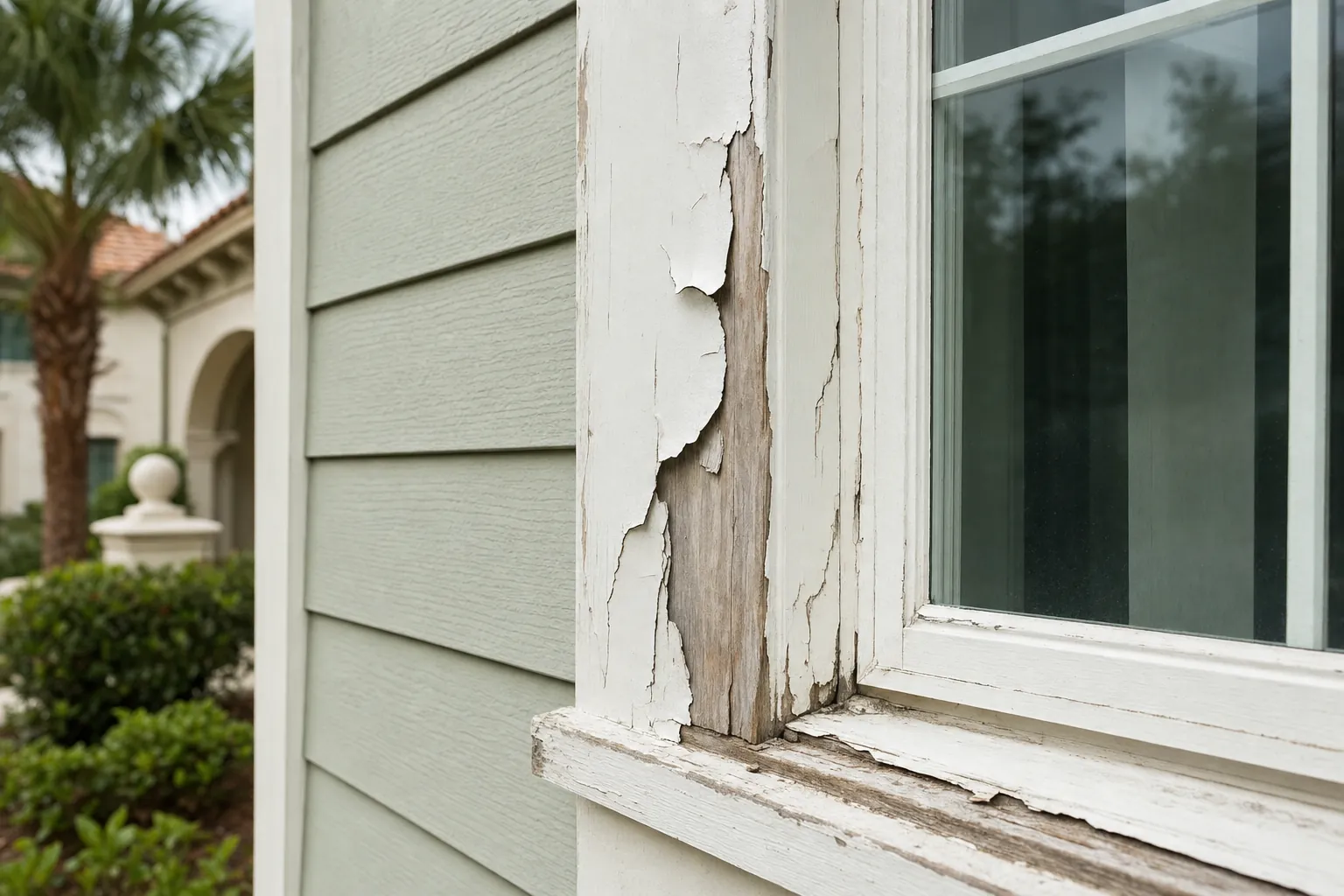
Sun exposure is also part of a broader maintenance conversation. If the exterior already shows fading, open caulk or paint failure, read the guide on when to repaint a Florida house before settling on a new color. A good color change deserves a surface that is ready to hold it.
Test Large Samples Outside, Not Just Small Chips
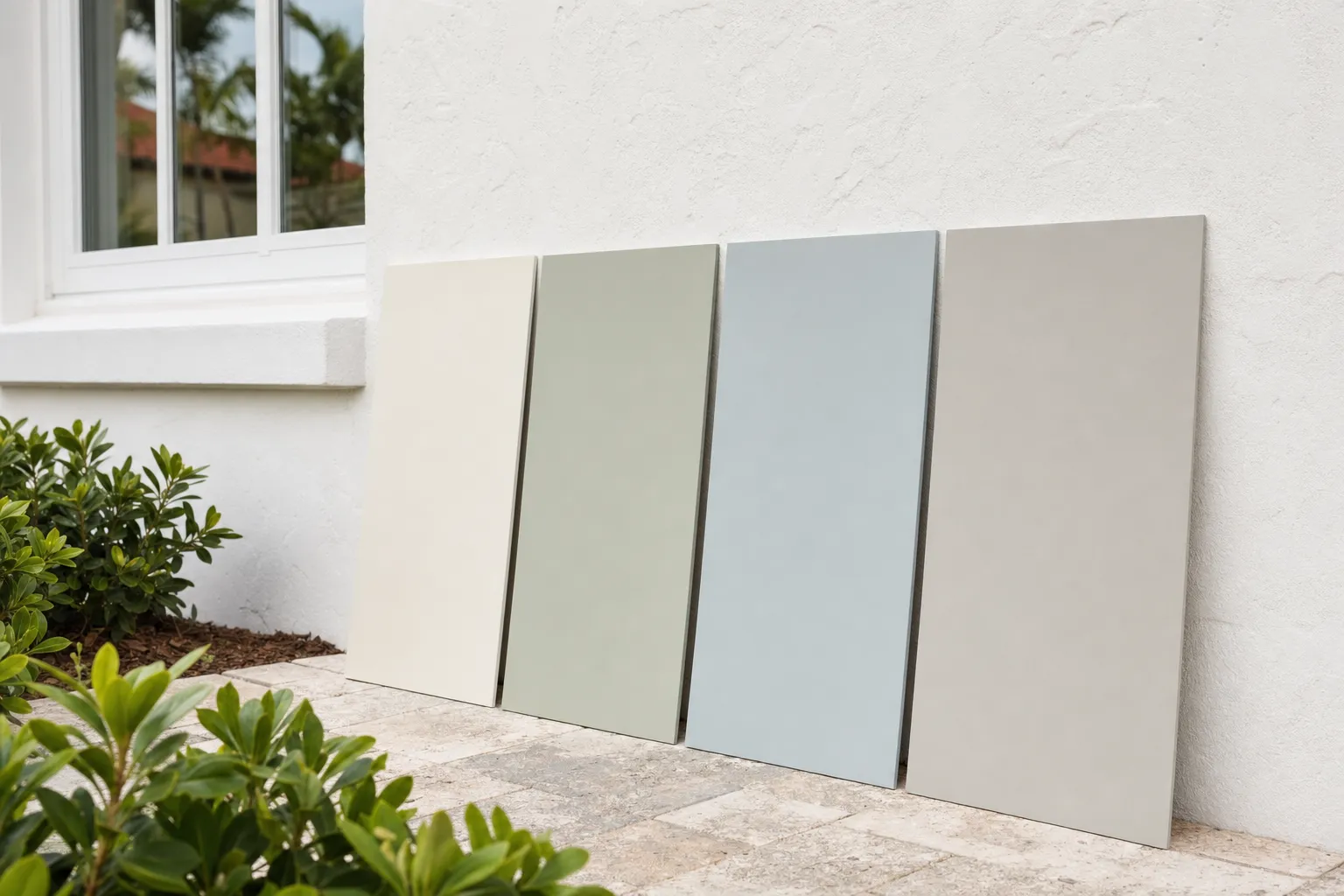
A paint chip is helpful for narrowing a color family, but it is too small to show how a whole elevation will read. Buy or make large sample boards, paint two coats and move them around the house. A removable board lets you test beside the roof, trim, landscape and driveway without putting a dozen patches directly on the siding. Benjamin Moore similarly advises testing samples in different lighting conditions before making the final choice.
Test the body and trim together. A body color can look great by itself but feel too yellow, blue or dull when paired with the intended white. If the front door is part of the plan, test that relationship too. You do not need twenty options. Three body colors, two trim colors and one or two accents are usually enough to find a clear winner.
Leave the samples up for several days. Check them after rain, when the sun is bright and when the house is in shade. Then stand at the curb. The winning option is rarely the most dramatic board at arm’s length; it is the one that makes the whole home look balanced from the distance people actually see it.
How to Rule Out a Color Before It Becomes a Problem
When two samples both look possible, use the house to break the tie. Eliminate a color if it makes the roof look more orange, more blue or more faded than it really is. Eliminate it if the trim turns dingy beside it, or if it makes the driveway and pavers feel disconnected from the front elevation. A good exterior color does not have to be exciting on a sample board. It has to make the permanent pieces look like they belong together.
Watch for colors that are only successful in direct sun. If a sample looks crisp at noon but turns cold, green or washed out in shade, it may not be a dependable choice across the whole house. The opposite can happen with dark colors: a shade that feels elegant under a porch can become much heavier on a broad wall that faces the afternoon sun. Move the boards and give the house a chance to disagree with the first impression.
Finally, separate personal preference from a temporary trend. A distinctive front door is easy to change later; the main body color is a much larger commitment. If you are torn between a quieter body color and a bolder one, put the stronger idea on the door, shutters or a small accent first. That preserves character without making the full exterior harder to live with over time.
Check the Practical Limits Before You Commit
Before ordering paint, confirm any neighborhood or homeowner association requirements, especially if the property has an approval process. Ask whether the rule applies to the body, trim, shutters and front door separately. It is easier to adjust a sample board than a finished exterior.
Also make sure the color decision fits the scope. A major change from dark to light or light to dark can affect coverage and the amount of preparation needed. Existing peeling paint, damaged trim, open joints and moisture issues should be addressed before the new finish goes on. The guide to exterior painting costs in Florida explains why preparation, access and surface repairs are part of a useful quote, not afterthoughts.
If the house was built before 1978 and the work will disturb old painted surfaces, pause before sanding or scraping. The EPA’s Renovation, Repair and Painting program explains when lead-safe requirements apply. That safety question should be resolved before color becomes the main conversation.
Bring the Color Plan Into a Real Exterior Scope
A good exterior color plan gives the painting conversation a useful starting point: here is the look you want, here are the fixed materials it needs to work with and here are the samples that held up outdoors. From there, the condition of the house still matters. The work may need cleaning, repairs, caulk, priming or attention to trim before the finish coats can do their job.
Good Fellas can help connect those pieces. The owner-led approach is useful when painting overlaps with trim details, small repairs or a larger home update, because the finish is planned around the actual condition of the property. Browse the project gallery for local examples, explore trim and finish carpentry when details need attention first, or request a quote when you are ready to walk through the exterior and your color ideas.
Frequently Asked Questions
What exterior paint colors work well in Florida?
There is no one Florida color that works for every house. Warm whites, soft neutrals, muted greens and restrained blues can all work well when they suit the roof, masonry, trim and amount of sun the house receives. The best choice is one that looks intentional with the materials that will remain in place.
Should I choose a light exterior paint color in Florida?
A lighter color can be a practical starting point for a very sunny home, but it is not the only good option. A mid-tone or deeper accent can still work when it is used thoughtfully with the home’s exposure, roof color and trim. Test the actual samples outside before deciding.
How many colors should a Florida house exterior have?
A simple three-part plan is usually enough: one main body color, one trim color and one accent color for the front door, shutters or a small detail. More colors can work on a detailed home, but they should each have a clear job rather than competing for attention.
Do exterior paint samples look different outside?
Yes. A color can shift noticeably between direct sun, shade, morning light and late-afternoon light. View large samples on more than one side of the house and keep them up for a few days before committing to the whole exterior.