Yes, you can sometimes paint outside in high humidity. The better answer is that humidity changes how carefully the job needs to be planned. It can slow drying, make overnight dew more likely and leave a wall damp long after it looks ready from a few feet away. In Florida, that means the weather app is a useful starting point, not permission to start coating the house.
For an exterior finish to perform well, the surface needs to be clean, dry and sound, and the coating needs enough time in acceptable conditions to set. A humid day can still offer that window. A day with trapped moisture in trim joints, shade that never lifts, a coating outside its stated limits or a storm arriving too soon does not. The right call comes from reading the actual house as well as the forecast.
The Short Answer: Check the Product, Surface and Next Weather Window
There is no universal humidity number that makes every exterior paint day safe or unsafe. Product requirements vary, and so do materials. Smooth, sound trim in moving air may be ready while rough stucco, bare wood, a recently repaired patch or a shaded porch ceiling is still releasing moisture. The same humidity reading can lead to different decisions on different sides of the same house.
Start with the coating label or product data sheet. Sherwin-Williams notes in its exterior product application guidance that application conditions must stay within the product’s recommended range. Then inspect the paint surface itself, especially the spots that dry last. Finally, look ahead far enough to make sure the fresh coat has the time it needs before rain, heavy evening moisture or dew becomes part of the picture.
Why Humidity Matters to Exterior Paint
Paint needs to release water or solvent as it dries. When the air already holds a great deal of moisture, that process can slow down. The coating may stay wet longer, remain soft longer than expected or reach the next weather event before it has developed enough resistance. That does not mean every humid day causes failure. It means the margin for rushing gets smaller.
Humidity also works with the other conditions around the house. Direct sun can overheat a wall even while the air feels humid. Shade can keep a wall cool and damp. Still air can slow drying. A late-afternoon storm can close the available window. A surface that was washed, rained on or exposed to overnight dew starts with more moisture than the same wall on a dry morning.
That is why a practical plan avoids using humidity as the only headline. A painter needs to know the surface temperature, the exposure of each elevation, the condition of the existing paint, the coating instructions and the forecast between the first coat and the next moisture event. The guide to painting in hot weather explains why the wall itself can matter more than the air-temperature number.

Humidity Is Not the Same as a Wet Surface
High humidity means the air contains a lot of moisture. A wet surface means water is already on or inside the material that needs paint. Those conditions often travel together in Florida, but they are not identical. A clear morning can still leave dew on trim, porch ceilings, lower siding, window sills and shaded walls. A wall can feel dry in the broad open area while joints and edges remain damp.
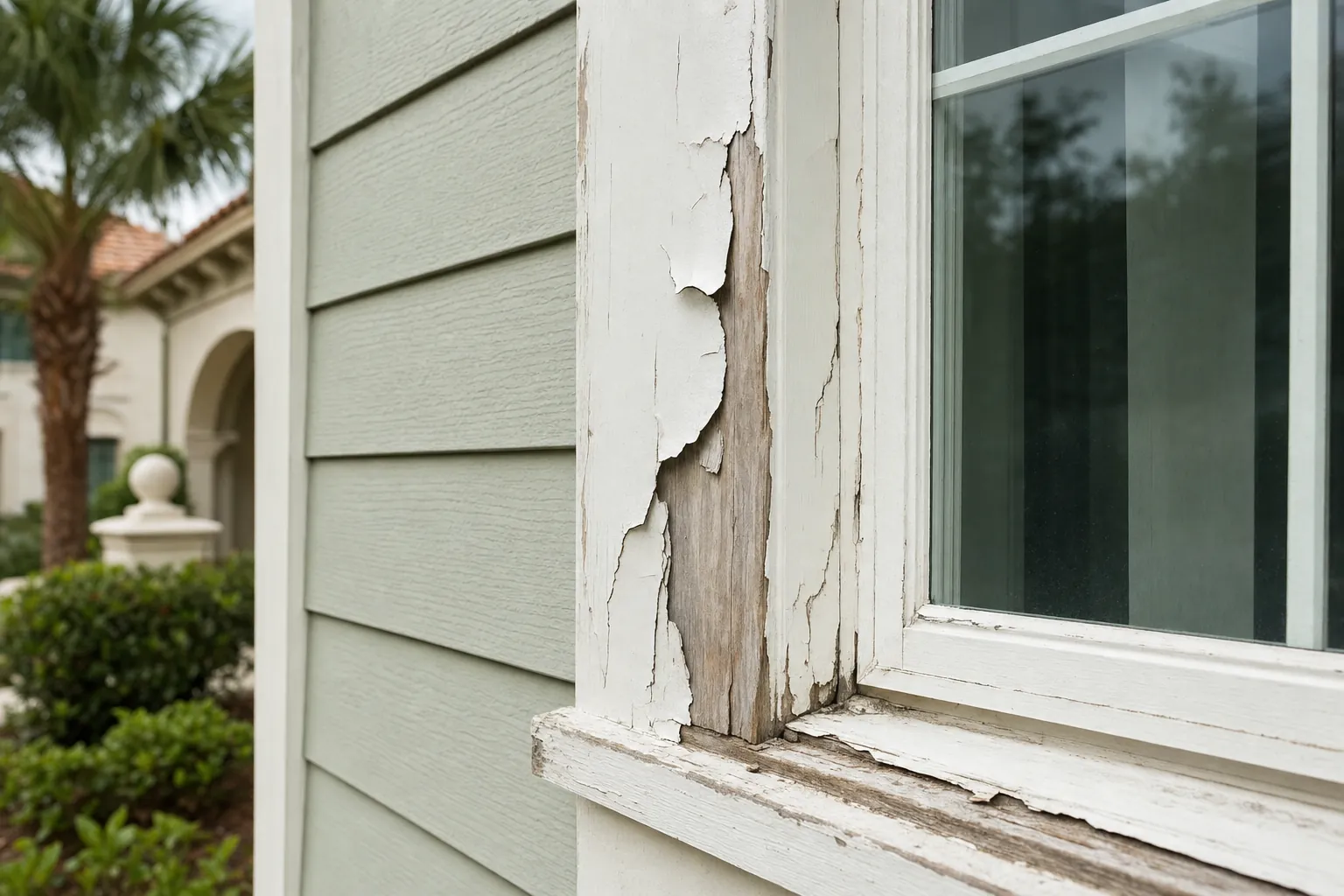
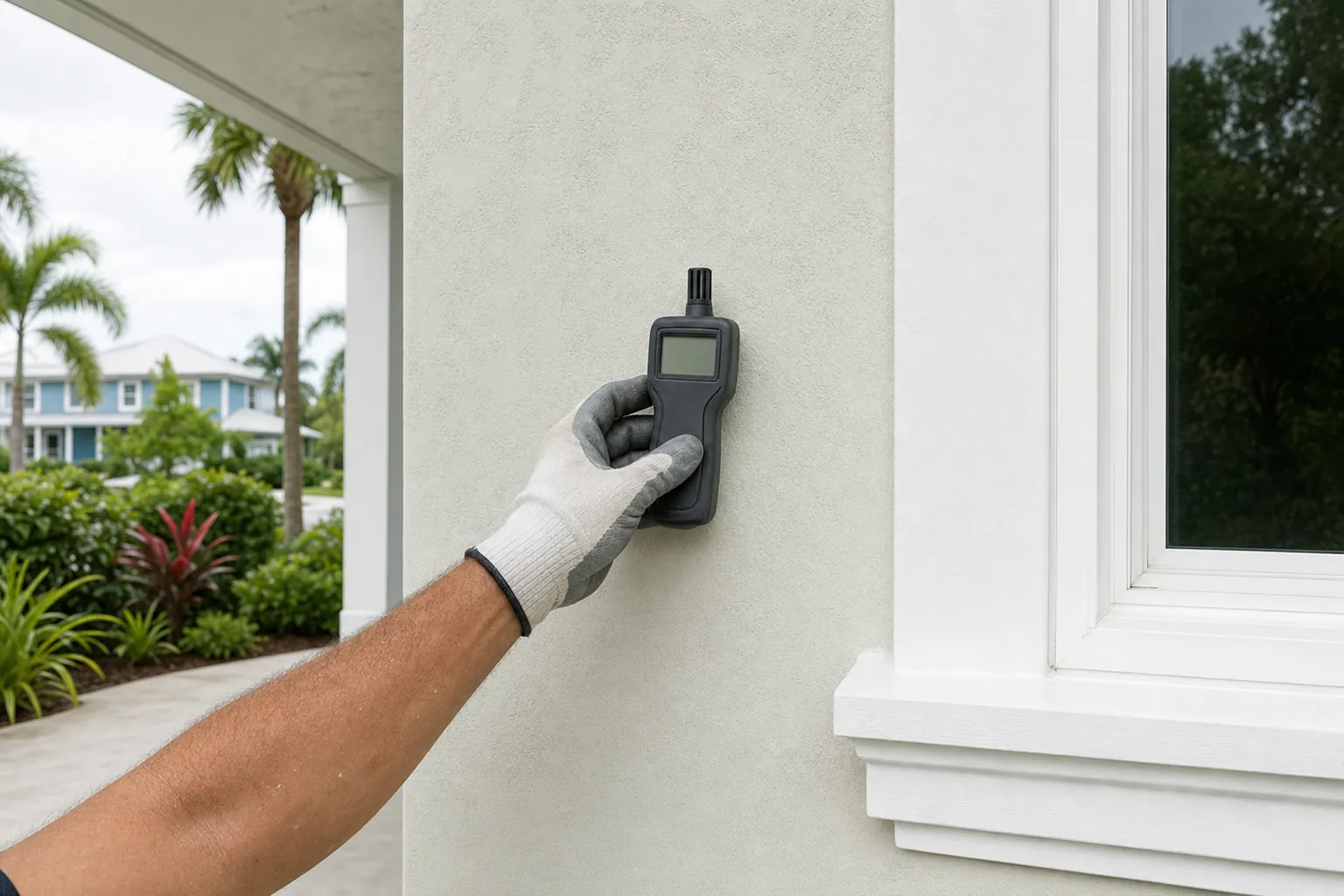
Look closely at the slowest-drying places: below eaves, around windows and doors, beside downspouts, near dense landscaping, at the bottom of siding, around porch columns and on the shaded side of the home. Check for a light sheen, darker material, cool damp areas, swollen wood fibers, fresh condensation or moisture inside open caulk joints. These details are more useful than deciding from the driveway that the day “looks dry.”
If the exterior was recently washed or hit by rain, give it its own drying time. The guide to painting after rain walks through why stucco, wood, trim joints and protected areas can hold water longer than the visible wall face. Humidity can then extend that wait, especially when the air is still and the house has not had a real drying period.
Watch Dew Point and Shade, Not Only the Daily Forecast
Morning dew is one of the easiest ways to misread a Florida paint day. The sky can be clear, the chance of rain can be low and the house can still collect moisture overnight. Trim and shaded surfaces are especially prone to it because they may stay cooler than the surrounding air. Painting over that moisture risks poor adhesion before the fresh coat has even had a chance to level.
Start with an on-site inspection once the sun has had time to work on the house, rather than deciding the day before. Then move around the exterior. A sunny wall may be ready first, while the north side, the wall behind shrubs or the ceiling under a porch may need more time. Planning the sequence around those real conditions can make a humid day workable without pretending every surface is ready at once.
Pay attention to the pattern, too. If the same wall, trim board or window edge is always the last place to dry, that can point to more than ordinary weather. Overgrown plants, an overflowing gutter, a short downspout or an open joint can keep delivering water to the same area. Solve that condition before relying on new paint to hide it.
Do not try to force-dry a questionable area with aggressive heat or pressure. That can dry the outer skin while leaving moisture deeper in the material or push water where it does not belong. Time, shade awareness, air movement and the right weather window are more dependable tools than trying to outsmart the surface.
Read the Paint Label Before Scheduling the Work
Exterior paint products are not interchangeable. Their instructions may set requirements for air temperature, surface temperature, humidity, dew point, rain exposure and recoating time. Those limits exist because the product chemistry, the material being painted and the expected drying path all matter. Treat the label as the decision-maker, not a general internet rule or the number printed on a phone weather app.
The same care applies to preparation. Sherwin-Williams’ surface-preparation guidance emphasizes the need for a clean, dry and sound surface before coating. That is especially important after a humid stretch, when chalking, mildew, failed caulk or a water path can be hidden behind a seemingly simple painting request.
If a particular coating is not appropriate for the conditions, changing the calendar is often better than forcing the product. A delay is frustrating. Correcting a finish that stayed soft, marked easily, flashed unevenly or lost adhesion is usually more frustrating and more expensive.

Build the Preparation Plan Before the Better Window Arrives
Humidity becomes less of a problem when the work that does not require fresh paint has already been handled. Protect plants and nearby surfaces, stage ladders and materials, confirm access, scrape loose paint, make sound repairs, address open caulk joints and complete the cleaning far enough ahead for the house to dry. Then the favorable window can be used for the part of the job that depends on it.
The exterior-paint preparation checklist helps homeowners see the difference between a quick coat and a complete scope. Cleaning, repair, priming and masking are not ornamental extras. They establish the surface that the finish needs to hold onto, and they should not be compressed into the same narrow window as the painting itself.
For a homeowner comparing quotes, this is a useful question to ask: what happens if the weather turns? A thoughtful scope should explain how the project will be protected, how drying conditions are judged and what preparation is complete before the coat goes on. The Florida exterior-paint cost guide explains why these planning details matter just as much as the paint quantity.
A Practical Humidity Checklist for Florida Homes
1. Start with the exact coating. Read the product instructions for its stated application conditions and drying guidance. Do not substitute a general humidity limit from a different paint line.
2. Check for moisture on the house. Inspect trim, lower walls, shaded sides, joints and sheltered details. A dry-looking front wall is not proof that the whole exterior is ready.
3. Separate dew from rain. Dew may form without a storm. Give it time to lift, then reassess the slow side of the house before work begins.
4. Read the full weather window. Look beyond the start time. Make sure the coating can set before the likely arrival of rain, evening humidity or the next morning’s condensation.
5. Work with the house. Start where conditions are right, move with the shade pattern and stop when the surface or forecast falls outside the plan.
6. Do not paint over a water problem. Recurring moisture at one trim board, window, gutter line or wall section deserves a closer look before a new finish covers the evidence.
When It Is Better to Wait
Wait when the surface is visibly damp, when morning dew has not lifted from the protected areas, when a recent wash or storm has not had time to dry, when the next rain is too close or when the coating’s instructions do not support the conditions. Be especially careful around bare wood, repaired trim, peeling areas and surfaces with a history of bubbling or staining. Those are not good places to test whether the weather might cooperate.
Older homes need a separate safety check before sanding or scraping. For houses built before 1978, the EPA’s Renovation, Repair and Painting guidance explains when lead-safe requirements apply. That question should be settled before the preparation work begins, regardless of humidity.
Plan Around the Condition of the Home
Good Fellas approaches exterior work as more than a color change. The useful question is whether the house is clean, dry, repaired where needed and ready for the finish system being considered. On a humid Florida day, that may mean beginning on one elevation later, addressing a failed joint before paint or waiting for a more reliable window instead of pushing a coat onto a questionable surface.
That approach brings repair, preparation and finish work into the same conversation. It helps a homeowner avoid paying to cover a moisture problem that will return through the new paint, and it makes the final result more likely to look intentional and hold up as intended. Browse recent Good Fellas project work, explore the exterior painting service, or request a quote when you are ready to talk through your home’s condition and the finish you want.
Frequently Asked Questions
Is 80% humidity too high to paint outside?
It can be, depending on the paint product, surface temperature and whether dew or moisture is forming on the house. Check the specific coating label instead of treating one humidity number as a universal rule.
Can paint dry in high humidity?
Paint can dry in humid weather, but high humidity can slow water or solvent release and lengthen the time it needs to set. The right question is whether the surface is dry, the coating is within its stated conditions and the next weather window is long enough.
Why does exterior paint stay tacky in humid weather?
A tacky finish can happen when a coating has not had the conditions or time it needs to dry properly. Humidity may be part of the cause, but surface moisture, heavy application, shade, low air movement or an incompatible surface can also be involved.
Should I paint early in the morning in Florida?
Only after checking for dew and surface moisture. Morning can offer cooler conditions, but shaded trim, porch ceilings and lower walls may still be damp from overnight condensation. A dry-looking forecast is not enough by itself.
What is the best way to plan exterior painting in humid weather?
Prepare the house before the dry window, confirm the product requirements, inspect the slowest-drying areas and work with the sun and shade pattern. Leave enough time for the fresh coat to set before the next dew or rain period.